The Laundering: How Western Media Built the Permission Structure for Anti-Gender Authoritarianism

The countries cracking down hardest on trans people are not Western European social democracies. They are Russia, Hungary, Georgia, and Turkey. The American press got the comparison wrong, and the consequences are measured in increasing authoritarian consolidation in the US.
There is a narrative that the American press has been telling about transgender rights for several years now, and it roughly goes something like this: well-meaning progressive European countries took a careful look at gender-affirming care for minors and pulled back. Therefore, the American debate about restricting such care is a reasonable, evidence-based recalibration, not an ideological crusade. The story is tidy, it flatters the self-image of the reactionary centrist commentariat as being liberal-minded, and it has been repeated ad nauseum in some variation in the New York Times, the Washington Post, The Atlantic, and a constellation of Substack newsletters and heterodox media outlets that have made anti-trans concern-trolling a lucrative editorial niche.
The story is also, in its most important dimensions, a lie.
Not a lie in the sense of fabricated facts, necessarily, but a lie as a matter of its framing. This is one of the most dangerous kinds, because it passes through normal editorial standards intact. The framing omits the political context of the UK’s broader anti-trans crackdown amidst the surging illiberal Reform Party. It omits the Cass Review and the explicitly political circumstances under which the NHS England gender services were restructured. It omits the role of gender-critical activists who have infiltrated influential positions in British media, government advisory bodies, and healthcare institutions. It omits the funding networks that connect organizations like the Society for Evidence-Based Gender Medicine (SEGM) to broader anti-LGBTQ political infrastructure. And most critically, it omits the international comparisons that actually illuminate what is happening to trans people in the United States.
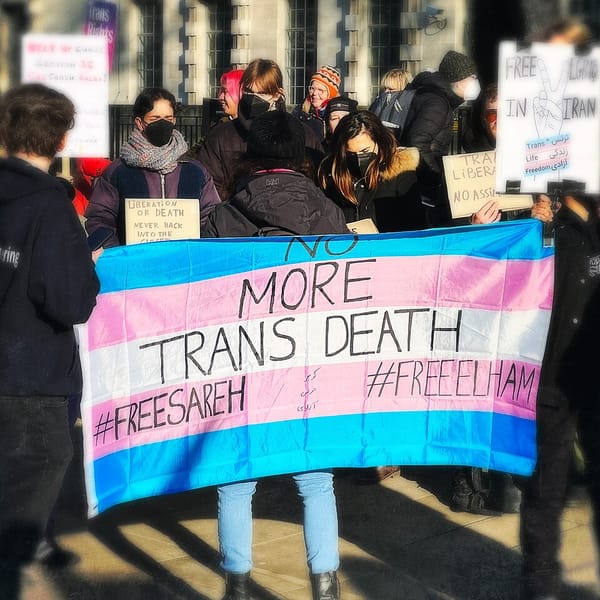
The relevant comparison is not to western Europe. The relevant comparison is to Russia, Hungary, Georgia, and Turkey. These are countries where crackdowns on LGBTQ rights and abortion rights have proceeded in lockstep with democratic backsliding, where the targeting of gender nonconformity has served as both a symptom and an accelerant of authoritarian consolidation. The American press, by consistently reaching for the British or Nordic comparison rather than the authoritarian one, has performed a laundering function. It has taken a campaign that structurally resembles the early phases of autocratic minority targeting and dressed it in the language that plays on false American stereotypes of European progressivism.
The Phantasm
Judith Butler, in Who’s Afraid of Gender?, identifies what they call the “anti-gender ideology movement.”[1] It’s a global network of political actors, religious institutions, and civil society organizations that have made “gender” into a phantasm: a psychosocial figure that collects and displaces anxieties about economic precarity, cultural change, and political instability onto the bodies of trans people, queer people, feminists, and anyone else who disrupts the patriarchal order.[2] The phantasm operates through projection. Those who are actively stripping rights from vulnerable populations accuse “gender ideology” of being the force that destroys civilization, the family, and even biological reality itself. As Butler observes, “those who imagine that something called gender will take all your rights away are attributing to gender what they themselves are doing, namely taking rights away.”[3]
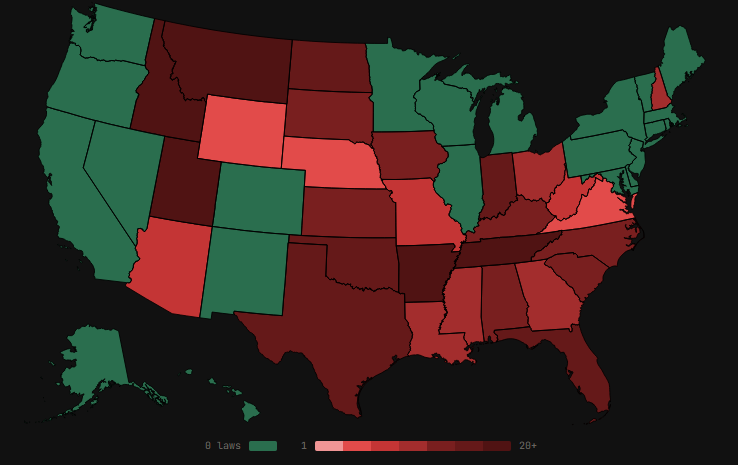
This observation aptly describes the rhetorical machinery that has produced thousands of anti-trans bills in the US, targeting every aspect of trans people’s participation in society. The phantasm of “gender ideology” is what allows a state legislator in Oklahoma to introduce a bill criminalizing transgender identity and a New York Times science reporter to frame restrictions on adolescent healthcare as a matter of cautious evidence review, and for both to be understood as participating in similar spheres that ultimately produce a shared result. The phantasm provides the connection. It renders the extreme and the moderate as points on a shared continuum of “concern.”
Butler makes the critical connection that Western commentators consistently miss: the anti-gender movement is not just an attack on trans rights. Rather, it is “as much an attack on feminism, especially reproductive freedom, as it is on trans rights, gay marriage, and sex education.”[4] The countries that crack down on trans people do not stop there. They restrict abortion access. They narrow domestic violence protections. They curtail women’s labor rights. They attack sex education. The target is not any single population, it is the concept of gender autonomy itself, and through it, the broader apparatus of liberal democratic governance that recognizes individuals as rights-bearing subjects independent of their assigned reproductive roles.
The wrong comparators
When the American press covers restrictions on gender-affirming care for minors, the reflexive comparison used is to point to the United Kingdom, Finland, and Sweden. The New York Times has repeatedly invoked the Cass Review as evidence that “even liberal European countries” are reconsidering the evidence base for adolescent gender medicine.[5]
What this framing omits is the political ecosystem in which the Cass Review was produced and received. The United Kingdom’s media landscape on trans issues has been captured and turned entirely hostile to trans existence over the past decade. This was done by a loose network of ideologically aligned gender-critical activists who hold positions of extraordinary influence at the Times, the Guardian, the BBC, and within the civil service and parliamentary advisory structures. Organizations like the LGB Alliance and Sex Matters, which were founded specifically to oppose trans inclusion, have been granted charitable status and political access. Journalists and commentators who have built entire careers on anti-trans advocacy have created an information environment in which the restriction of trans rights reads as moderate consensus rather than the product of a sustained political campaign.[6]
The honest comparators, the countries whose legislative trajectories actually parallel the American anti-trans campaign, are the ones the press almost never invokes.
The authoritarian pattern
In 2023, Russia enacted a comprehensive ban on gender-affirming medical care for all ages, prohibited legal gender changes, and barred trans people from adopting children or serving as foster parents. These measures followed Putin’s years-long campaign to position “traditional values” as the spiritual core of Russian national identity and “gender ideology” as a Western import threatening national security.[7] Butler notes that Putin declared gender a threat to national security as early as 2015. Putin did this because it “calls into question who can be a parent, whether gay and lesbian parenting is OK, whether gay and lesbian marriage is OK, whether trans rights are admissible.”[8]
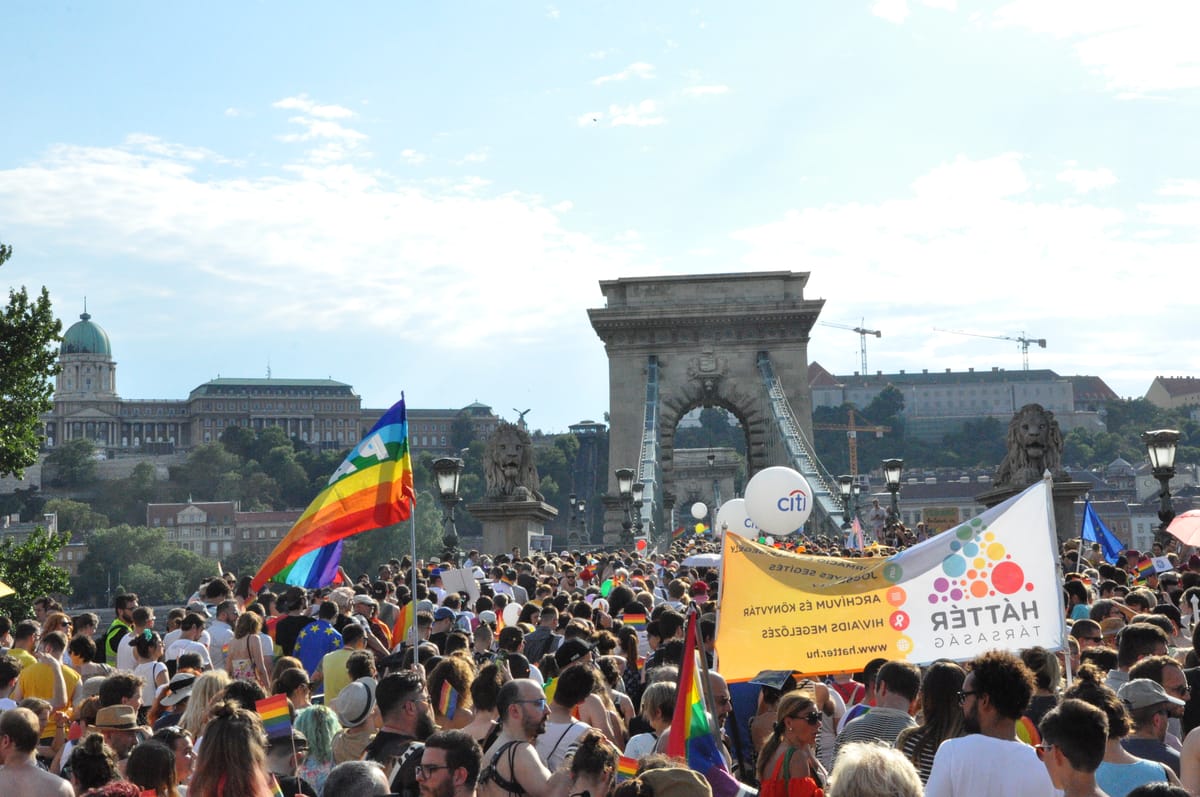
Hungary, under Viktor Orbán, banned legal gender recognition in 2020, prohibited content depicting or promoting gender reassignment or homosexuality to minors in 2021 (in legislation explicitly modeled on Russia’s “gay propaganda” law), and has systematically stripped LGBTQ protections as part of a broader project of democratic erosion.[9] Freedom House downgraded Hungary from a democracy to a “transitional or hybrid regime” in 2020, the first EU member state to receive that designation. The Center for American Progress has documented how Orbán’s democratic backsliding is “characterized by state capture of public institutions; assaults on minority rights, especially migrant, Roma, and LGBTQ rights; aggressive nationalist rhetoric; and attacks on the rule of law.”[10]
Georgia, under the Georgian Dream party, passed a comprehensive anti-LGBTQ legislative package in 2024 that banned gender-affirming medical procedures, prohibited legal gender changes, outlawed same-sex marriage and adoption, and restricted LGBTQ content in media and education. This legislation arrived alongside the foreign agents law modeled on Russia’s, the crackdown on civil society organizations, and the systematic weakening of electoral competition that has led analysts to classify Georgia as a competitive authoritarian regime in the making.[11]
Turkey, under Erdoğan’s AKP, has presided over a decade-long erosion of LGBTQ rights that has tracked precisely with the country’s authoritarian turn, from the banning of Pride marches beginning in 2015, to the withdrawal from the Istanbul Convention on preventing violence against women in 2021, to the increasingly punitive treatment of trans people in housing, employment, and public life, all are operating within an anti-gender framework that has served to consolidate religious-conservative alliances supporting the regime’s grip on power.[12]
The pattern is not very subtle. In every case—Russia, Hungary, Georgia, Turkey—the crackdown on trans and LGBTQ rights has functioned as a leading indicator and active mechanism of democratic backsliding. It is not incidental to the authoritarian project. Rather, it is a fundamental part of it. The targeting of gender nonconformity serves multiple functions simultaneously: it provides a culturally resonant enemy for populist and nationalist mobilization; it tests the boundaries of rights-stripping that the collective polity will tolerate; it fractures potential opposition coalitions by isolating the most vulnerable group first; and it establishes the precedent that the state can define the boundaries of legitimate identity.
These are the countries whose trajectories the American anti-trans legislative campaign most closely resembles. Not Sweden. Not Finland. It is Russia, Hungary, Georgia, and Turkey.
The reactionary centrist pipeline
How did the American press get the comparison so catastrophically wrong? The answer lies in the role of what I have elsewhere called the “reactionary centrist.” This is the class of commentators, editors, and intellectuals who position themselves as voices of moderation while systematically legitimizing the premises of authoritarian movements.[13]
As I argued in “Crackpots, Fools, and the Modern Sympathetic Elite,” Hannah Arendt identified this dynamic at the dawn of twentieth-century authoritarianism: a “temporary alliance between the mob and the elite,” fueled by the elite’s genuine delight in watching the mob shatter the norms of respectability.[14] Today’s reactionary centrists: the Bari Weisses, the Jesse Singals, the Atlantic essay-industrial complex, all perform the same function. They take claims originating in far-right anti-gender networks, launder them through the rhetoric of “open debate” and “just asking questions,” and deposit them in the mainstream information stream stripped of their political provenance.
The pipeline works as follows: an admin assistant at a gender clinic works with a far right movement lawyer who compared LGBTQ people to cockroaches to produce a highly salacious and misleading affidavit on the quality of care in that clinic. A heterodox outlet like The Free Press runs it as a brave whistleblower story. The New York Times picks it up, frames it as “growing questions” in the “medical community,” and cites the Nordic comparators for credibility. A state legislator in Missouri quotes the Times article in committee testimony. A bill passes. Repeat across dozens of states.
At no point in this pipeline does anyone mention Russia’s comprehensive ban on gender-affirming care. At no point does anyone note that Hungary’s anti-LGBTQ legislation was explicitly modeled on Russian precedent. At no point does anyone observe that these groups are pursuing a strategic playbook that maps onto the early phases of authoritarian minority targeting in every country where that process has been documented.
The omission is not an innocent one. It is the laundering of the authoritarian project. And it is this laundering that makes the legislative ratchet possible, because as long as the comparison set is “cautious European healthcare policy” rather than “Russian and Hungarian authoritarian consolidation,” the political cost of targeting trans people remains negligible for any legislator, pundit, journalist, or institution. The laundering has provided them with the comforting lie that they are doing the “right thing” rather than advancing authoritarianism. The road to hell, or in this case authoritarianism, is paved by people feigning pretense that they were doing the right thing.
What the media intentionally refuses to see
Butler’s analysis of the anti-gender movement as a fascist formation is at its core, a structural claim. “Anti-gender ideology is one of the dominant strains of fascism in our times,” Butler writes.[15] The movement’s function is to displace genuine sources of social anxiety such as economic precarity, climate catastrophe, and institutional decay onto the phantasm of “gender” thereby generating a target population whose persecution can be offered as evidence that the state is acting to protect the nation. “Once people start being identified with gender and considered a threat to the nation, whether as a terrorist, a devil or the Ebola virus, then whatever measures the state needs to take to eliminate this threat are justified in the name of national security.”[16]
This is what is happening in the United States right now. The federal government is threatening to defund hospital that provide gender-affirming care to trans youth. It is investigating teachers who affirm trans students. It is banning trans people from military service. It is punishing states that maintain protective laws. State legislatures have introduced over a thousand bills in a single year targeting a population that constitutes half a percent of the adult public. And the press, the institution whose function is to contextualize these developments for a democratic public, continues to frame it as a healthcare policy debate. Or worse, a debate about sports participation.
The framing is the permission structure. The framing by the media is what makes all of this possible. And until the American press is willing to look at Russia, Hungary, Georgia, and Turkey instead of western European nations, until it is willing to call the anti-gender movement what Butler and every serious scholar of democratic backsliding has identified it as, the ratchet will continue to turn, and the laundering will continue to work. And as long as it works, it won’t stop with trans people. The ratchet will be used again, and again, and again on every minority group disfavored by authoritarian movements until they consolidate total control in the autocratic leader.
[1] Judith Butler, Who’s Afraid of Gender? 3–4 (Farrar, Straus and Giroux 2024).
[2] Id.
[3]Interview with Judith Butler, Judith Butler on the Anti-Gender Ideology Movement, Current Theories of Gender, and Their Ideas of Radical Democracy, Rev. Democracy (May 13, 2024), https://revdem.ceu.edu/2024/05/13/judith-butler/.
[4]Butler, supra note 1.
[5] See, e.g., Azeen Ghorayshi, England Limits Puberty Blockers for Transgender Youths, N.Y. Times (Mar. 12, 2024); see also Alejandra Caraballo, Anatomy of a Hit Piece: Deconstructing The New York Times’ Attack on Transgender Rights in U.S. v. Skrmetti, The Dissident (June 20, 2025), https://www.thedissident.news/anatomy-of-a-hit-piece-deconstructing-the-new-york-times-attack-on-transgender-rights-in-u-s-v-skrmetti/; Alejandra Caraballo, The New York Times’ War on Trans People, The Dissident (June 3, 2025), https://www.thedissident.news/the-new-york-times-war-on-trans-people/.
[6] See Alejandra Caraballo, The New York Times’ War on Trans People, The Dissident (June 3, 2025), https://www.thedissident.news/the-new-york-times-war-on-trans-people/ (documenting the systematic pattern of Times sourcing from anti-trans advocacy organizations).
[7] Human Rights Watch, Russia: New Anti-LGBT Law an Assault on Rights (July 24, 2023), https://www.hrw.org/news/2023/07/24/russia-new-anti-lgbt-law-assault-rights.
[8] Interview with Judith Butler, supra note 2.
[9] Human Rights Watch, Hungary: Anti-LGBT Law Threatens Children’s Rights (June 16, 2021), https://www.hrw.org/news/2021/06/16/hungary-anti-lgbt-law-threatens-childrens-rights; see also Freedom House, Nations in Transit 2020: Hungary (2020), https://freedomhouse.org/country/hungary/nations-transit/2020 (downgrading Hungary from “semi-consolidated democracy” to “transitional/hybrid regime”).
[10] Ctr. for Am. Progress, Hungary’s Democratic Backsliding Threatens the Trans-Atlantic Security Order (Jan. 22, 2024), https://www.americanprogress.org/article/hungarys-democratic-backsliding-threatens-the-trans-atlantic-security-order/.
[11] Freedom House, Nations in Transit 2024: Georgia (2024); see also Atlantic Council, Four Contests for Democracy in Europe (Apr. 21, 2025), https://www.atlanticcouncil.org/blogs/new-atlanticist/four-contests-for-democracy-in-europe-challenge-the-narrative-of-advancing-authoritarianism/ (noting Georgia “has gradually slid into authoritarianism under Georgian Dream”).
[12] Didem Unal, The Variety of Anti-Gender Alliances and Democratic Backsliding in Turkey, 26 Int’l Feminist J. Pol. 1 (2024), https://www.tandfonline.com/doi/full/10.1080/14616742.2023.2299701; Carnegie Endowment for Int’l Peace, Why Türkiye Is at a Tipping Point Between Democracy and Authoritarianism (Mar. 2025), https://carnegieendowment.org/emissary/2025/03/turkey-protests-erdogan-democracy-authoritarianism.
[13] Alejandra Caraballo, Crackpots, Fools, and the Modern Sympathetic Elite, The Dissident (May 27, 2025), https://www.thedissident.news/crackpots-fools-and-the-modern-sympathetic-elite/.
[14] Hannah Arendt, The Origins of Totalitarianism 326–40 (Harcourt, Brace & Co. 1951).
[15] Judith Butler, Why Is the Idea of ‘Gender’ Provoking Backlash the World Over?, The Guardian (Oct. 23, 2021), https://www.theguardian.com/us-news/commentisfree/2021/oct/23/judith-butler-gender-ideology-backlash.
[16] Interview with Judith Butler, supra note 2.